
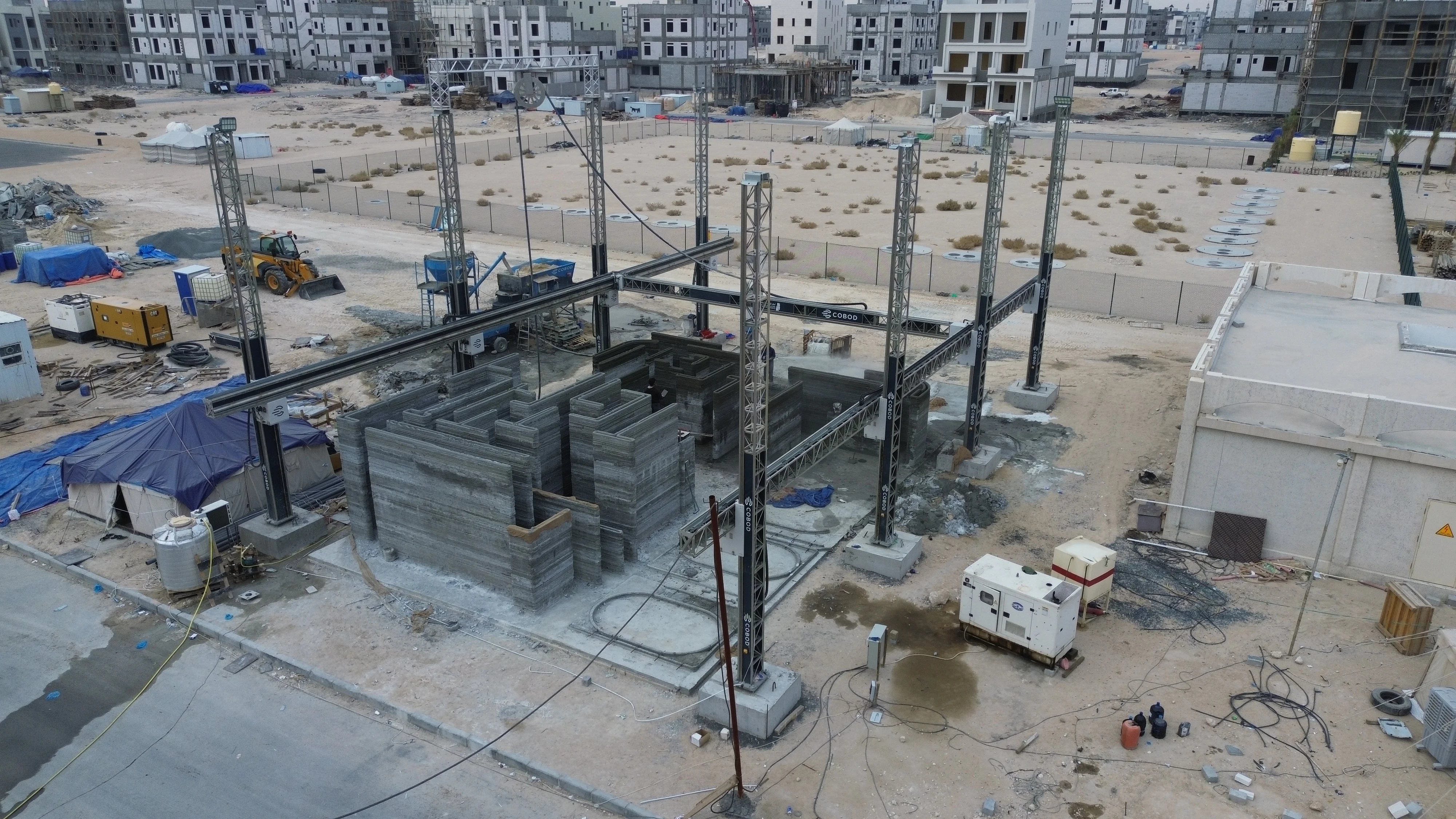

Building a Sustainable Future with 3D Technology
How Abyan Building Construction uses 3D printing to reduce waste, shorten timelines, and support more sustainable building in Kuwait.
50%
Potential timeline reduction versus traditional methods
30%
Potential reduction in overall project costs
COBOD
3D construction printing technology
Project Background
Market need and sector context
Client or Market Need
Kuwait's construction industry faces rising demand for affordable, sustainable, and rapidly constructed buildings. Traditional construction methods are labor-intensive, time-consuming, and produce significant material waste. Kuwait's harsh climate, with extreme temperatures, also requires building solutions that improve efficiency, reduce costs, and support sustainability goals. Abyan Building Construction addresses these challenges by leveraging 3D printing technology, enabling faster, more cost-effective, and more sustainable construction while aligning with Kuwait's broader vision for sustainable economic development.
Industry Context
The global 3D printing construction industry has gained traction because of its potential to transform how buildings are designed and constructed. In arid environments like Kuwait, 3D printing offers strategic advantages by minimizing labor needs, reducing timelines, and lowering material waste. Abyan's adoption of COBOD 3D printing technology positions it as a regional pioneer in sustainable and efficient construction solutions.
Challenges and Solutions
Practical constraints, targeted responses
Labor Shortages and High Costs
Issue: Kuwait's construction industry often faces skilled labor shortages and high labor costs, creating delays and budget pressure.
Solution: COBOD 3D printing automates much of the construction process, reducing reliance on manual labor while accelerating project execution.
Material Waste and Environmental Impact
Issue: Traditional construction methods generate significant material waste and increase project costs.
Solution: 3D printing deposits concrete layer by layer with precision, optimizing material use and reducing the environmental footprint.
Climate Constraints
Issue: Extreme heat and dry conditions can affect construction materials, worker productivity, and building integrity.
Solution: COBOD systems can operate efficiently in challenging climates and use concrete mixes suited to Kuwait's environment while reducing prolonged outdoor labor exposure.
Regulatory and Adoption Barriers
Issue: Because 3D printing is a relatively new construction method in Kuwait, approvals and industry acceptance can slow adoption.
Solution: Abyan collaborates with authorities and stakeholders, using demonstration projects and successful builds to support acceptance and compliance.
Speed and Cost of Construction
Issue: Traditional construction projects can take months or years, leading to high holding costs and delayed returns.
Solution: COBOD 3D printing can significantly accelerate timelines, with some structures completed in days, reducing delay-related costs.
Results and Impacts
Measurable progress with strategic value
Enhanced Construction Efficiency
Abyan's use of COBOD 3D printing technology reduced construction timelines by up to 50% compared with traditional methods. Automation enabled continuous building with fewer interruptions and greater scalability.
Cost Optimization
By lowering labor requirements and reducing material waste, Abyan achieved a 30% reduction in overall project costs. Energy-efficient printing processes also contributed to cost savings.
Sustainability and Waste Reduction
3D printing significantly reduced material waste, aligning with Kuwait's environmental goals. COBOD printer precision allowed for near-zero waste during construction.
Innovation and Market Impact
Abyan has set a benchmark for innovative construction in Kuwait. Its projects have drawn attention for speed, efficiency, and sustainability, strengthening market reputation and client trust.
Key Takeaways
Abyan's journey shows how 3D printing technology can transform construction in challenging climates. By addressing labor shortages, reducing waste, and improving efficiency, Abyan offers a model for sustainable and cost-effective building practices in Kuwait.